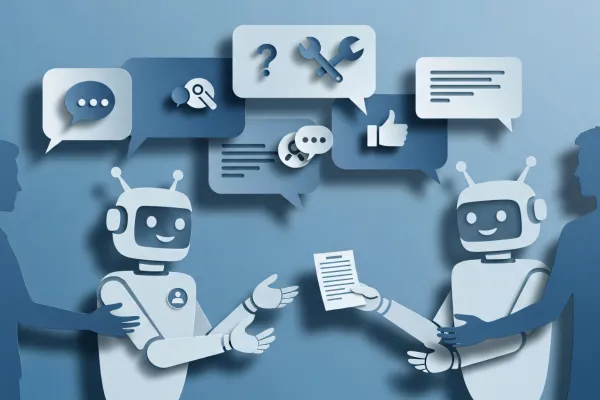
Drowning in Missed Calls and Lost Leads? How Local Businesses Use AI to Capture Every Opportunity Without Firing a Single Employee
"The most expensive employee you'll never hire is the customer you never called back."

You're in the middle of a job. Your phone buzzes. Then again. Then again.
It's a potential customer asking about your services. But you can't answer—you're elbow-deep in work. By the time you call back three hours later, they've already hired your competitor.
Sound familiar?
Every day, local service businesses lose thousands of dollars not because they're bad at what they do, but because they can't be in two places at once. You can't answer phones while you're serving customers. You can't respond to website inquiries at 9 PM. You can't qualify leads while you're actually doing the work that pays the bills.
This is where artificial intelligence comes in—but not in the way you might fear.
You've probably heard the headlines: "AI Replaces Thousands of Jobs" or "Robots Taking Over Customer Service." It's enough to make any small business owner nervous. The last thing you need is expensive technology that threatens your loyal team or makes your business feel impersonal.
Here's the truth that those headlines miss: The most successful local businesses aren't using AI to replace their teams. They're using it to protect their time, capture opportunities they're currently missing, and let their employees focus on the work that actually requires a human touch.
In this article, you'll discover exactly how small businesses like yours are implementing AI without layoffs, without losing customers, and without sacrificing the personal service that built your reputation. More importantly, you'll learn how to reclaim hours of your day while capturing leads that are currently slipping through your cracks.
Table of Contents
Why Local Business Owners Are Scared of AI (And Why You Shouldn't Be)
What AI Actually Does for Local Service Businesses (The Real Story)
The Tasks Draining Your Time Right Now (That AI Handles Perfectly)
How AI Makes Your Existing Team More Valuable (Not Obsolete)
Real Local Businesses Using AI Right Now (And Growing Because of It)
Where You Still Need Real Humans (And Always Will)
How to Add AI Without Freaking Out Your Team
Stop Losing Opportunities While You're Busy Doing the Work
Frequently Asked Questions
Why Local Business Owners Are Scared of AI (And Why You Shouldn't Be)
Let's address the elephant in the room.
When you hear "artificial intelligence," you probably think of massive corporations automating entire departments and eliminating jobs. You think of soulless chatbots that frustrate customers. You think of complicated technology that requires a computer science degree to operate.
The concerns are valid:
"My customers expect a personal touch." They chose a local business specifically to avoid dealing with automated systems.
"My team will think I'm trying to replace them." Morale matters, and you've worked hard to build a reliable staff.
"I'm not tech-savvy enough." You're great at your trade, but managing complicated software? That's another story.
"What if I invest in the wrong solution?" Money is tight, and you can't afford expensive mistakes.
Here's what changes everything: AI for small businesses works nothing like enterprise automation.
You're not Amazon trying to eliminate warehouse workers. You're not a call center routing thousands of calls per hour. You're a local business trying to be responsive to customers while actually running your business.
The AI tools designed for businesses like yours have one job: handle the repetitive stuff so you and your team can focus on the important stuff.
What AI Actually Does for Local Service Businesses (The Real Story)

Forget the sci-fi scenarios. Here's what AI means for your business:
Think of AI as a tireless assistant who works 24/7, never gets frustrated, never forgets to follow up, and handles the routine questions that interrupt your day dozens of times.
AI doesn't replace your master plumber, your skilled electrician, or your experienced office manager. Instead, it acts as:
Your after-hours receptionist that captures leads when you're closed
Your first line of response that acknowledges inquiries instantly instead of hours later
Your appointment scheduler that fills your calendar while you sleep
Your lead qualifier that gathers essential information before your team gets involved
Your follow-up system that ensures no potential customer falls through the cracks
When a potential customer visits your website at 10 PM, AI responds immediately. When someone calls during lunch, AI captures their information. When you're booked solid, AI schedules them for your next available slot.
AI removes friction from the customer experience, not people from your payroll.
The Tasks Draining Your Time Right Now (That AI Handles Perfectly)
Let's get specific. There are certain tasks in your business that are absolutely necessary but don't require your expertise or your team's specialized skills.
These are the tasks eating up hours every week:
Answering the same questions repeatedly:
"What are your hours?"
"Do you serve my area?"
"How much does [basic service] cost?"
"Are you accepting new customers?"
Managing the inquiry chaos:
Responding to website forms
Returning missed calls
Checking voicemail
Reading and replying to initial emails
Playing phone tag:
"Hi, I'm calling you back..."
"I missed your call earlier..."
"Just following up on..."
Administrative coordination:
Scheduling appointments
Sending confirmations
Providing directions
Collecting basic customer information
Here's the painful truth: Every hour your skilled team spends on these tasks is an hour they're not serving customers, closing sales, or doing the specialized work you hired them for.
And here's the even more painful truth: Every inquiry you miss because you were busy is a customer hiring your competitor instead.
AI handles these tasks with perfect consistency, instant response times, and zero frustration—even at 2 AM on a Sunday.
How AI Makes Your Existing Team More Valuable (Not Obsolete)

Now we get to the part that matters most.
AI doesn't make your employees obsolete. It makes them more effective, less stressed, and more focused on revenue-generating activities.
Here's what happens when AI handles the routine stuff:
Your team stops getting interrupted constantly. No more stopping mid-task to answer "What are your hours?" for the tenth time today. Deep work actually becomes possible again.
Your skilled workers stay in the field longer. Your technician doesn't need to come back to the office to return calls. They can focus on completing jobs while AI handles initial inquiries.
Your office staff handles higher-value conversations. Instead of answering basic questions all day, they're having meaningful conversations with qualified leads who are ready to buy.
Everyone goes home on time. No more staying late to return calls or catch up on emails. AI handled the first response hours ago.
Your team sees better results. When they do talk to customers, those customers already have basic information, realistic expectations, and genuine interest.
AI becomes the shield that protects your team's time and energy. Your employees can finally focus on what they do best:
Having in-depth conversations with serious customers
Solving complex problems that require expertise
Building trust and relationships
Delivering exceptional service
Closing sales and growing accounts
When employees see AI reducing their stress instead of threatening their jobs, resistance disappears fast.
Real Local Businesses Using AI Right Now (And Growing Because of It)
This isn't theoretical. Local service businesses across every industry are already using AI to capture more opportunities without expanding their teams.
The HVAC company that was missing 40% of calls because technicians were in attics and crawl spaces. Now AI answers every call, books appointments, and creates service tickets. Technicians stay productive, and the owner stopped losing $15,000+ monthly in missed opportunities.
The dental practice that had two staff members spending half their day answering "Do you take my insurance?" Now AI handles routine inquiries and appointment scheduling. The staff focuses on patient care and treatment coordination. Patient satisfaction increased, and so did revenue.
The law firm that couldn't afford a full-time receptionist but was losing potential clients to competitors who answered faster. AI now captures every inquiry with professionalism, gathers case details, and qualifies leads before the attorney invests time. The firm doubled its consultations without hiring anyone.
The landscaping business that was overwhelmed during spring season, with the owner's phone ringing constantly while trying to operate equipment. AI now handles estimate requests, schedules site visits, and manages the calendar. The owner gained back 10+ hours per week and stopped missing lucrative commercial opportunities.
The home cleaning service that could only take calls during business hours, missing evening inquiries from busy professionals. AI responds 24/7, books appointments, and sends confirmations. Bookings increased 35% from after-hours leads alone.
In every single case, the same staff remained. The quality of service improved. Revenue increased.
Where You Still Need Real Humans (And Always Will)
Let's be crystal clear about something: AI should never replace the human elements that make your business special.
There are aspects of your business where only a real person will do:
When empathy matters. A customer who's upset about a problem doesn't want a robot—they want someone who listens, understands, and genuinely cares about making it right.
When expertise is required. Diagnosing a complex issue, recommending the right solution, or providing professional advice requires knowledge, experience, and judgment that AI doesn't have.
When trust is being built. High-value sales, long-term contracts, and ongoing relationships require the human connection that creates loyalty and referrals.
When situations get complex. Unique customer needs, special requests, or complicated scenarios need human creativity and problem-solving.
When quality service is delivered. The actual work you do—the plumbing repair, the legal counsel, the medical treatment, the home renovation—requires human skill and craftsmanship.
AI doesn't replace these things. It ensures they happen at the right time with the right people.
When a customer reaches out, AI provides the fast initial response they expect. It gathers the information your team needs. It sets appropriate expectations. Then, when your team engages, they're having a high-value conversation with a qualified lead who's already halfway through the door.
How to Add AI Without Freaking Out Your Team

Implementation matters just as much as the technology itself.
If you roll out AI the wrong way, you'll face resistance, confusion, and maybe even good employees looking for other jobs. But if you introduce it correctly, your team will wonder how they ever managed without it.
Start with transparency. Don't surprise your team with new technology. Explain that you're implementing AI to handle the repetitive tasks that interrupt their day—not to eliminate their roles.
Frame it as a benefit. "We're adding a system that will answer basic questions and capture leads 24/7, so you won't have to drop everything every time the phone rings."
Start small and prove value. Begin with after-hours coverage or website inquiries. Let your team see AI capturing opportunities they would have missed anyway, with zero impact on their workload.
Let your team stay in control. AI handles first contact, but your team decides what happens next. They're still the experts and decision-makers.
Gather feedback and adjust. Ask your team what's working and what isn't. Involve them in refining the system so it serves them better.
Share the results. When you start capturing more leads, closing more sales, and reducing stress, make sure your team knows AI played a role. They'll become advocates instead of skeptics.
Within weeks, most teams have the same reaction: "Why didn't we do this sooner?"
The reduction in constant interruptions alone makes AI worth it. Add in the captured revenue from missed leads, and it becomes a no-brainer.
Stop Losing Opportunities While You're Busy Doing the Work
Here's the bottom line:
You didn't start your business to spend all day answering phones, responding to emails, or playing appointment-scheduling tag. You started it to serve customers, deliver quality work, and build something meaningful.
But somewhere along the way, growth created a painful problem: the more successful you became, the harder it got to respond to every opportunity. You're losing potential customers not because you're bad at what you do, but because you can't be available 24/7.
AI solves this without requiring you to hire more staff, work longer hours, or sacrifice the personal touch your customers expect.
When implemented correctly, AI:
Captures every lead that comes through your website, phone, or social media
Responds instantly instead of hours or days later
Works around the clock so you never miss evening or weekend inquiries
Reduces team stress by eliminating constant interruptions
Qualifies opportunities so your team focuses on serious buyers
Protects your time for the high-value work only you can do
Grows your revenue without growing your overhead
The businesses thriving with AI aren't replacing people—they're empowering them to focus on what humans do best while AI handles what it does best.
You've built a business on quality service and personal relationships. AI doesn't change that—it amplifies it by ensuring every potential customer gets a fast, professional response and every qualified lead reaches your team at the right time.
The question isn't whether you can afford to implement AI. It's whether you can afford to keep missing opportunities while your competitors are capturing them.
Ready to see how AI could work for your specific business without disrupting your team or losing your personal touch? Learn how local service businesses are using intelligent automation to capture more leads, reduce stress, and grow revenue at https://adstormai.com.
Frequently Asked Questions
Will my customers know they're talking to AI?
Most customers care more about getting fast, accurate answers than whether a human or AI provides them. That said, many AI systems can be configured for transparency if that aligns with your brand. The key is that customers get helpful responses immediately instead of waiting hours or days.
Is AI actually affordable for small businesses like mine?
AI solutions designed for local businesses typically cost a fraction of hiring additional staff—often less than $300-700 monthly (some a little higher when it combines multiple touch points like phone, email, website, social media, etc.) but compare that to $3,000+ for an employee. More importantly, they generate ROI quickly by capturing leads you're currently missing. Most businesses find AI pays for itself within the first month.
Can AI integrate with what I'm already using?
Yes. Modern AI tools are built to work with your existing systems—your website, calendar, CRM, phone system, and scheduling software. Implementation is usually straightforward, and many providers offer setup assistance.
What if my team resists the change?
Some initial hesitation is completely normal. The key is positioning AI as a tool that makes their jobs easier, not a replacement. Once your team experiences fewer interruptions, better-qualified leads, and the ability to focus on meaningful work, resistance typically disappears. Most employees end up loving the reduced stress.
Will AI replace my customer service staff?
No. AI handles initial contact and routine questions, allowing your customer service team to focus on complex issues, relationship building, and high-value interactions. Think of AI as the first filter that ensures your team's expertise is used where it matters most.
What happens if AI doesn't understand a question?
Quality AI systems are designed to recognize when they're out of their depth. When faced with complex or unusual questions, they can seamlessly transfer to your team, take a detailed message, or schedule a callback. You maintain control over how these situations are handled.
How quickly can I get AI up and running?
Depending on the solution and your specific needs, implementation typically ranges from a few days to a couple of weeks. Many providers offer quick-start options that can have you capturing leads within 24-48 hours.


