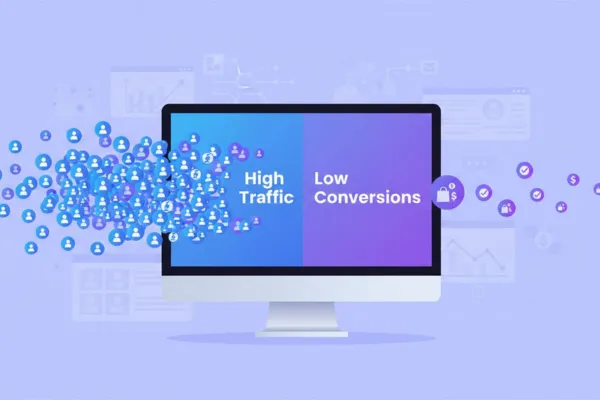
Why More Website Traffic Doesn’t Always Mean More Customers (And What Actually Drives Sales)
“Getting traffic is only half the job. What happens next determines whether your business grows.”
There’s a common belief shared by many small business owners: if we could just get more people to our website, we’d get more customers.
It makes sense on the surface. More visitors should logically lead to more inquiries, more phone calls, more appointments — and ultimately, more revenue.
But here’s the reality that most businesses discover the hard way: more traffic does not automatically mean more customers.
You can double your website visitors overnight and see absolutely no change in your leads or sales. It happens every day to businesses across every industry. Companies invest in ads, SEO campaigns, and social media — traffic climbs — but the phone still doesn’t ring the way they hoped.
Many businesses focus so heavily on traffic that they ignore the more important question: what happens after someone arrives on your website?
Businesses that solve this gap are the ones that consistently outgrow their competitors — not because they have more money to spend, but because they’ve built smarter systems for turning interest into action.
In this post, we’ll break down why traffic and customers are not the same thing, where most businesses lose potential leads, and what you can do to turn your website visitors into paying customers.
Table of Contents
• The Traffic-Equals-Sales Myth
• Why Website Visitors Don’t Become Leads
• Understanding the Hidden Gap Between Traffic and Conversion
• Why Response Speed Is Your Biggest Competitive Advantage
• How to Build a System That Converts Traffic Into Customers
• The Role of Automation in Modern Lead Response
• Real-World Examples of the Traffic-to-Customer Gap
• A Step-by-Step Action Plan for Your Business
• Frequently Asked Questions
The Traffic-Equals-Sales Myth
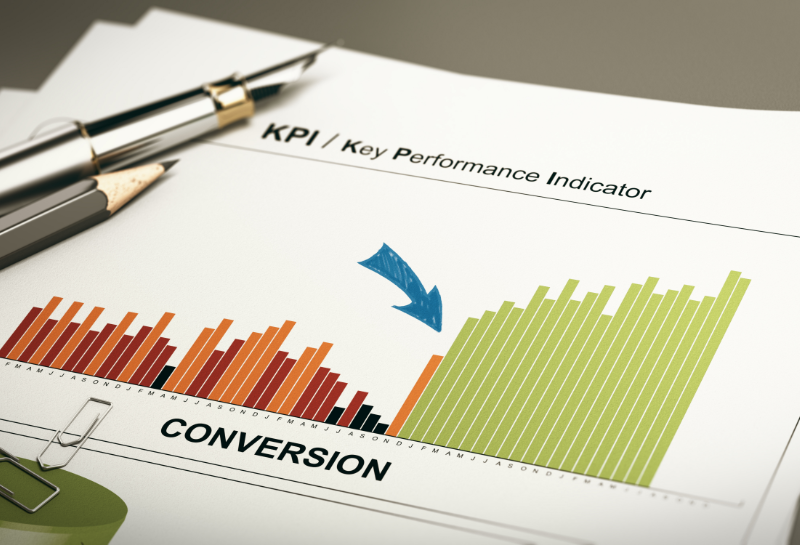
The digital marketing industry has long been obsessed with traffic. Drive more visitors to your website, and the business will follow. While traffic certainly has value — without it, nobody finds you — it’s only the very first step in a much longer journey.
Here’s what traffic actually is: attention. A visitor landing on your website means someone noticed you existed for a moment. What happens next determines whether that moment turns into money.
Think about it in offline terms. If you owned a retail store and a thousand people walked past your storefront every day but nobody came inside, that foot traffic would mean nothing to your bottom line. The same principle applies online.
Businesses spend heavily on search engine optimization, pay-per-click advertising, social media marketing, blog content, and email marketing. All of these strategies can bring visitors to your website, but they all share the same limitation: they stop at the front door.
Getting someone to your website is only the beginning. If you’re looking for organic ways to improve visibility, this guide on How Small Businesses Can Increase Website Traffic Without Ads (2026 Guide) breaks down several strategies that help small businesses attract visitors without relying entirely on paid campaigns.
The businesses that succeed online shift their focus from “how do we get more traffic?” to “how do we convert the traffic we already have?” That mindset shift changes everything.
Why Website Visitors Don’t Become Leads
If traffic isn’t turning into customers at your business, the reasons are almost always the same. Let’s look at the most common conversion killers.
Unclear Calls to Action
Many websites provide useful information but fail to guide visitors toward the next step. Weak calls to action look like vague “Learn More” buttons or contact pages buried deep in the navigation. Strong calls to action look like “Get a Free Quote in 2 Minutes,” “Call Now for Same-Day Service,” or a prominent booking button visible the moment someone lands on your page. Most small business websites are built to inform visitors, not to convert them. There’s a significant difference between the two.
Limited Contact Options
Customers have different preferences for how they communicate. Some will call without hesitation. Others prefer text messaging, live chat, or a simple online form. If your website only offers one way to get in touch, you will lose leads from visitors who won’t bother reaching out in a way that doesn’t suit them. Each additional contact channel you provide removes a barrier between an interested visitor and an actual inquiry.
Leads Arriving Outside Business Hours
A large percentage of online inquiries happen in the evenings, early mornings, and on weekends — when people finally have a quiet moment to think about services they need. If someone finds your website at 8 PM on a Friday and there’s no system to capture that inquiry until Monday morning, there’s a strong chance they’ve already hired someone else by the time you respond.
Slow or Inconsistent Follow-Up
Even when leads arrive during business hours, inconsistent follow-up is one of the most common ways businesses lose customers they should have won. A contact form submitted Tuesday afternoon might not receive a response until Wednesday morning. By that point, the potential customer has often already spoken to two or three competitors and made their decision. Speed of response is not simply a courtesy — in competitive markets, it is one of the most powerful factors determining who wins the customer.
For a deeper look at how fast response affects conversion rates, see Lead Response Time: Why the 5-Minute Rule Boosts Conversions by 391%.
Understanding the Hidden Gap Between Traffic and Conversion

Most businesses think the customer journey looks like this: website visitor becomes customer. But the actual journey has several critical steps in between, and each one is a potential point of failure.
The real journey looks like this. First comes discovery, when a visitor finds your website. Then comes engagement, when they explore your content and form an impression of your business. Next comes the decision to reach out, which depends entirely on whether your website makes the next step clear and easy. Then comes initial contact, your business response, a real conversation, and finally conversion.
Traffic covers step one. Everything else determines whether a visitor ever becomes a customer. This is why businesses with strong traffic numbers can still struggle to generate leads. It’s not a traffic problem — it’s a conversion system problem. And conversion system problems are almost always fixable once you can see them clearly.
This is also where visibility and distribution matter. If your content is being seen but not helping move visitors deeper into the funnel, the issue may not be reach alone. Our article on How Content Amplification Really Drives Blog Traffic (And Why Most Blogs Never Get Seen) explains how traffic generation and visibility fit into the larger growth equation.
Why Response Speed Is Your Biggest Competitive Advantage
When a customer searches for a service online, they rarely contact just one business. In most cases they contact several at once, especially for services where the need feels urgent — home repairs, medical appointments, legal consultations, and more.
The company that responds first with a helpful and professional reply almost always wins that customer. This concept is widely known in sales and marketing as Speed to Lead, and the data supporting it is consistent across industries. Leads contacted within the first few minutes are dramatically more likely to convert than those followed up with even an hour later. Response delays of just a few hours can cut conversion rates significantly. And many businesses take a full day or longer to respond, losing those leads entirely without ever realizing it.
In competitive local markets, Speed to Lead is often the single most important differentiator between businesses that grow and those that stagnate. Your price could be better, your reviews stronger, your service genuinely superior — none of that matters if a competitor engages the customer before you get the chance.
If you want a broader strategic explanation of this concept, read Why Speed to Lead Is the Most Important KPI for Small Businesses.
Why Most Businesses Are Slow to Respond
It’s rarely a matter of not caring. The real reasons are operational. Leads come in through multiple channels — email, forms, phone, text, social media — and monitoring all of them consistently is overwhelming for a small team. Staff have other responsibilities. After-hours leads have no system to catch them. And without a clearly defined follow-up process, responses happen whenever someone happens to notice a new message. These are all solvable problems, and solving them doesn’t necessarily require hiring more people.

How to Build a System That Converts Traffic Into Customers
The businesses that consistently turn web traffic into revenue aren’t always the ones with the biggest budgets. They’re the ones that have built deliberate systems for moving a visitor from initial interest to actual conversation.
Audit Your Calls to Action
Walk through every page of your website as if you were a first-time visitor. Ask yourself whether it’s immediately obvious what to do next, whether there’s a compelling reason to act now, and whether it’s easy to get in touch from a mobile phone. Improving your calls to action is often the single highest-return investment you can make — and it usually costs nothing but time.
Expand Your Contact Channels
Your website should offer a prominently displayed phone number with click-to-call on mobile, a simple contact or quote request form, a chat or messaging option, and online appointment scheduling if relevant. Each channel you add removes a potential barrier between a visitor and a lead.
Reduce Your Lead Response Time
Set a concrete response time standard and build your processes around it. A realistic goal for most competitive markets is responding to every new inquiry within five to fifteen minutes during business hours. For after-hours leads, have an automated acknowledgment in place so inquiries don’t go cold overnight.
If you need a tactical walkthrough, see How to Reduce Lead Response Time (Step-by-Step Guide for Small Businesses).
Track Your Conversion Rate
Most businesses track website traffic but have no idea how many of those visitors become leads or customers. Start measuring monthly lead volume, average response time, conversion rate, and which contact channels generate the most inquiries. Without these numbers you’re making decisions without data.
The Role of Automation in Modern Lead Response

For most small business owners, responding to every inquiry within minutes sounds unrealistic. You can’t monitor inboxes around the clock while running a business. This is where modern automation tools have become genuinely valuable — not by replacing human relationships, but by ensuring no lead slips through the gap between when an inquiry arrives and when a person can respond.
Automation can acknowledge new inquiries instantly by name, ask qualifying questions to prepare your team for the conversation, allow ready-to-book leads to schedule directly from your calendar, send immediate responses to after-hours leads, and route inquiries to the right team member. The key point is that automation is a bridge, not a replacement. The relationship and the close still happen through genuine human conversation. Automation simply ensures that conversation gets a chance to happen.
If your business is struggling with missed leads caused by response delays, you may also want to read The True Cost of Slow Lead Response for Small Businesses.
Want to see how fast your business is responding to new leads?
Many small businesses lose customers simply because response times are slower than they realize. If you’re curious how your lead response system compares, explore how businesses are reducing missed opportunities with smarter response systems.
👉 Learn more about how modern lead response systems work:
Real-World Examples of the Traffic-to-Customer Gap
Home Services Business
A plumbing company invests in Google Ads and drives hundreds of visitors to their website each week. Contact forms are only checked once at the end of each day, leaving an average response time of 12 to 18 hours. Competitors who answer calls and respond to texts within minutes win the majority of those customers. The plumber thinks he has a traffic problem. He actually has a response problem.
Healthcare Practice
A dental office adds an appointment request form to their website and receives dozens of submissions each month. But without a defined process for who reviews submissions or how quickly, some requests are missed and others take 48 hours to get a callback. Many of those patients have already booked elsewhere.
Professional Services Firm
A law firm ranks well on Google and receives consistent traffic. But the only contact option on their website is a generic email address — no visible phone number, no chat, no online booking. Visitors who are ready to hire someone can’t figure out how to take the next step and leave to find a firm that makes it easier. In each of these cases, traffic was never the problem. Everything that happened after traffic arrived was.
A Step-by-Step Action Plan for Your Business
This Week
Review every call to action on your website and make sure each one is clear and specific. Confirm your phone number is visible on every page with click-to-call enabled for mobile. Set up an automatic response for contact form submissions so every new lead gets an immediate acknowledgment.
This Month
Add a live chat or messaging option to your website. Define a lead response time goal — ideally under 15 minutes during business hours — and communicate it to your team. Centralize all incoming lead channels into a single monitored inbox so nothing gets missed.
This Quarter
Implement a CRM or lead management system to track every inquiry from first contact through conversion. Explore automation for after-hours lead engagement. Analyze your funnel data to identify where leads are dropping off. Test online appointment scheduling to reduce friction for visitors ready to book.
Even two or three of these improvements, done consistently, can produce a meaningful increase in your conversion rate without spending an additional dollar on traffic.
Conclusion

More website traffic can help your business grow — but traffic alone does not create customers.
The businesses that win consistently make it easy to reach out, meet customers on their preferred channels, and respond quickly enough to start the conversation before a competitor does.
Traffic creates attention. Conversion creates revenue. The gap between those two things is where most businesses either build something exceptional or leave money on the table every single day.
Start by examining what happens after someone arrives on your website. Is the path to becoming a customer clear and fast? Are you responding to every new inquiry with the urgency it deserves? Are after-hours leads being captured and followed up with promptly?
Fix those things — even gradually, one step at a time — and your investment in traffic will finally start producing the results you always expected.
Want to Capture More Leads From the Traffic You Already Have?
If your website is getting visitors but not enough inquiries, the problem may not be traffic — it may be what happens after someone reaches out.
Modern businesses are solving this by using systems that instantly respond to new inquiries, capture leads from multiple channels, and make it easier for customers to start a conversation.
Learn how businesses are improving response time and capturing more opportunities:
Frequently Asked Questions
Does more website traffic always mean more customers?
No. Traffic represents visitors, not customers. Customers are created only when visitors engage with your business, reach out through a contact channel, and receive a timely response. Traffic is just the first step in a multi-step process.
Why do some websites get a lot of traffic but very few leads?
The most common reasons are unclear calls to action, limited contact options, slow response times, and no system for capturing after-hours inquiries. Each of these is a gap in the conversion process where potential customers are quietly being lost.
How important is response time when someone contacts my business?
Extremely important. Customers who reach out to multiple businesses simultaneously almost always choose the first one that provides a helpful response. Even a delay of a few hours dramatically reduces your chances of winning that customer in a competitive market.
What is Speed to Lead and why does it matter?
Speed to Lead is the time between when a potential customer reaches out and when your business responds. The faster your response, the higher your conversion rate tends to be. Businesses that respond quickly consistently outperform competitors — even those with better prices or stronger reviews — simply because they engage the customer first.
What is a good response time goal for a small business?
A strong target is five to fifteen minutes during business hours. For after-hours leads, an automated acknowledgment sent immediately followed by a personal follow-up first thing the next morning is both practical and effective.
How can a small business respond faster without hiring more staff?
Automation tools can acknowledge inquiries instantly, gather qualifying information, allow leads to self-schedule appointments, and route conversations to the right team member. They don’t replace your team — they make sure no lead goes cold before your team can personally respond.
What is the single most important change a business can make to improve conversions?
Start with your calls to action. If your website doesn’t clearly tell visitors what to do next and make it easy to do it, more traffic will never solve the problem. Once your CTAs are strong, focus on reducing your lead response time. Those two improvements alone will move the needle more than almost anything else.


