
What Is Content Amplification? (And Why Most Businesses Have Never Heard of It)
“The internet doesn’t reward the best content. It rewards the most visible content.”
TABLE OF CONTENTS
- The Problem Nobody Talks About
- What Content Amplification Actually Is
- A Real-World Example of How This Works
- Why This Works: The Psychology Behind Amplification
- How Content Amplification Differs From Traditional SEO
- Why Small Businesses Have Been Slow to Adopt This
- The Missing Piece: Visibility Alone Isn't Enough
- What to Look For in an Amplification Strategy
- The Bottom Line
- Frequently Asked Questions

I want to tell you about a conversation we had with a business owner named Dana about three years ago.
Dana ran a boutique financial planning firm. Smart, experienced, genuinely good at her job. She'd been investing in content marketing for almost two years — a blog post every week, consistent LinkedIn updates, the occasional email newsletter. Her content was solid. Better than solid, honestly. But her website traffic had barely moved. Leads from organic search? Almost zero.
She asked us what she was doing wrong.
We looked at her setup and told her the hard truth: nothing about the content itself was wrong. The problem was that almost no one was ever seeing it.
That conversation is how we usually explain what content amplification is — and more importantly, why it matters so much more than most people realize.
THE PROBLEM NOBODY TALKS ABOUT
Before we get into definitions and strategy, let's be honest about something the marketing industry doesn't like to admit.
Most content fails — not because it's bad, but because the internet is enormous and publishing something doesn't automatically mean anyone finds it.
According to data from Ahrefs, roughly 90.63% of all web pages get zero organic traffic from Google. Zero. And that figure has been consistent for years.
Think about what that means in practice. The majority of blog posts, articles, and guides ever published are sitting somewhere on the internet, completely invisible to the people they were meant to help.
In reviewing content strategies, the pattern is almost always the same: businesses spend 90% of their resources on creating content and roughly 10% — if that — on distributing it. That imbalance is the single biggest reason most content marketing underperforms.
This is the gap that content amplification is designed to close.
WHAT CONTENT AMPLIFICATION ACTUALLY IS

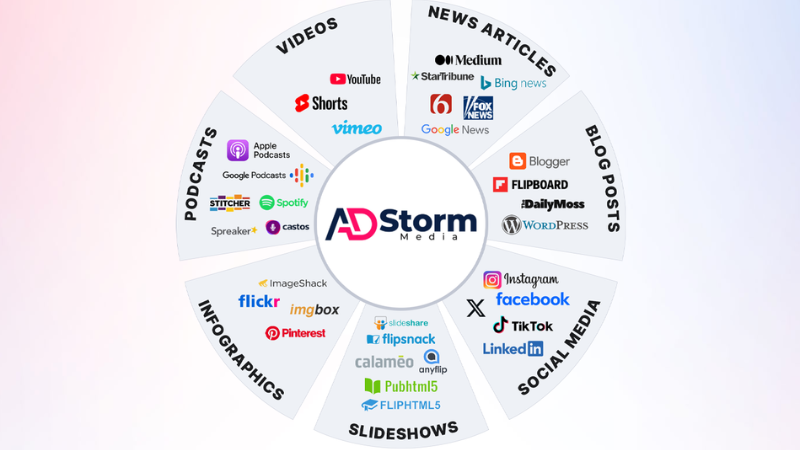
Content amplification is the process of distributing your content across multiple platforms, channels, and authority websites to dramatically increase visibility, reach, and long-term discoverability — beyond your own website.
That's the clean definition. But let me make it more concrete.
When most businesses publish a blog post, the distribution strategy looks something like this:
1. Post goes live on the website
2. Share it once on Facebook or LinkedIn
3. Maybe include it in an email
4. Move on and create the next piece
That's a single distribution path. One doorway. And if not many people walk through that doorway — because your social following is small, or your email list is new, or Google simply hasn't ranked the page yet — then the content effectively disappears.
Content amplification replaces that single doorway with many.
“The internet doesn’t reward the best content. It rewards the most visible content.”
The same blog post gets transformed and distributed so it can be discovered through:
- News and press distribution platforms
- Authority publications in your industry
- Medium and other open publishing networks
- Podcast mentions and audio content platforms
- Video channels and short-form video
- Document and slide-sharing networks
- Social syndication across multiple channels
- Email outreach and content partnerships
Instead of one asset, one audience, one chance — you have multiple discovery paths working simultaneously. Some will bring traffic today. Others will build authority over months. That combination is what makes the strategy compound in a way that single-channel publishing simply can't.
A REAL-WORLD EXAMPLE OF HOW THIS WORKS
Let me walk through what this looks like in practice, because the concept clicks differently once you see it applied to something concrete.
Say you run a landscaping company and you publish an article called "How to Prepare Your Lawn for a Dry Summer in the Southwest."
Without amplification, that article lives on your website and competes against every other landscaping company and gardening blog that's written something similar. Getting it ranked takes months. Most visitors will never see it.
With amplification, that same article gets:
- Repackaged as a news-style feature distributed to regional news aggregators and local press networks, where people actively read home and garden content
- Republished on a platform like Medium with a canonical tag pointing back to your site, giving it a second indexed home with a larger built-in readership
- Turned into a short LinkedIn article that gets engagement from homeowners and property managers following local business content
- Converted into a short video offering the top three tips, posted to YouTube and embedded back into the original post
- Submitted to a home improvement content network where editors are actively looking for practical, locally relevant advice
- Mentioned in an industry podcast, driving their listeners back to your site
That's not six pieces of content. It's one piece of content — one afternoon of writing — working across six channels.
In some cases, this approach can take content that was barely being seen and turn it into a multi-channel visibility asset over the next 60–90 days.
WHY THIS WORKS: THE PSYCHOLOGY BEHIND AMPLIFICATION

There's a reason large brands have quietly used versions of this strategy for decades, and it goes beyond just traffic numbers.
Repeated exposure builds trust in a way that a single touchpoint simply can't. Psychologists call it the mere exposure effect — the more familiar something feels, the more positively we evaluate it.
When a potential customer sees your brand mentioned in a local news article, then stumbles across your LinkedIn post a week later, then hears your name referenced in a podcast they follow — something shifts. You stop being a stranger. You start feeling like a known, credible presence in your space.
This is what large brands have always understood. They don't just run one ad or publish one article. They create what marketers call omnipresence — the sense that your brand is everywhere your potential customer goes.
For years, achieving that level of visibility required a serious PR budget, agency connections, and relationships with journalists and editors. The barrier to entry was high enough that most small and mid-sized businesses never bothered to try.
That's changed considerably in the last few years. Distribution platforms, content syndication networks, and modern amplification tools have made this approach far more accessible than it used to be.
Most businesses don't have a content problem. They have a visibility problem.
See how modern content amplification helps businesses get discovered online → AdStormAI
HOW CONTENT AMPLIFICATION DIFFERS FROM TRADITIONAL SEO
This is where we see the most confusion, so it's worth addressing directly.
SEO and content amplification are not competing strategies. They're not even doing the same thing. But they're also not interchangeable.
Traditional SEO is fundamentally about optimizing your own website so that Google ranks your pages higher in search results. It involves keyword research, on-page optimization, technical site health, and building backlinks to signal authority. Done well, it brings organic search traffic directly to your site.
Content amplification is about expanding your brand's visibility across the broader web — regardless of what your own website's SEO looks like. It's not about ranking your pages. It's about being present and credible across multiple platforms so people encounter your brand in more places.
The practical difference matters:
SEO traffic is largely pull — people search for something and your site appears. Amplification creates push — your content reaches people where they already are, even if they weren't looking for you.
That said, the two strategies reinforce each other in meaningful ways. When your content is published and referenced across multiple authority platforms, you tend to accumulate more brand mentions, more referral traffic signals, and more inbound links — all of which contribute to how Google evaluates your site's authority over time.
Businesses that combine both consistently outperform those running either strategy in isolation.
WHY SMALL BUSINESSES HAVE BEEN SLOW TO ADOPT THIS

If content amplification is this effective, you might reasonably wonder why more businesses aren't doing it already.
The honest answer is a few things working together.
First, most marketing education — the blog posts, courses, and consultants that small business owners are most exposed to — still centers almost entirely on the same three pillars: SEO, paid advertising, and social media posting. Amplification doesn't fit neatly into any of those categories, so it tends to get skipped over.
Second, until relatively recently, effective amplification did require resources most small businesses didn't have. Real distribution at scale meant paying PR firms, cultivating media relationships, and having enough brand recognition that editors would care about your content. That kept most of the strategy locked inside larger organizations.
Third, the results take a shape that's harder to attribute in a simple analytics dashboard. A mention in a regional news outlet, a republished article on an industry site, a podcast reference — these build brand familiarity and authority in ways that are genuinely valuable but sometimes harder to trace back to a specific lead or sale. Businesses focused exclusively on immediate, measurable ROI sometimes undervalue those longer-cycle benefits.
The businesses that understand amplification now, before it becomes common practice in their market, have a window of advantage that won't stay open forever.
THE MISSING PIECE: VISIBILITY ALONE ISN'T ENOUGH
Here's something worth being honest about, because it matters.
Amplification is a powerful visibility tool. But visibility without a functioning conversion system is like driving traffic to a storefront with no one inside and no way to leave a message. This is why more visibility without a system is often a waste of money — and it's something worth understanding before investing in distribution.
We've worked with businesses that invested heavily in amplification and saw real results — more brand recognition, more website traffic, more inbound inquiries. We've also worked with businesses that saw all of those same leading indicators improve and still struggled to convert that visibility into revenue.
The difference was almost always what happened after someone found them.
Could the website clearly explain what they offered and who it was for? Was there a simple, frictionless way to take the next step? Was someone following up quickly when a lead came in? Speed to lead is one of the most important — and most overlooked — factors in whether visibility actually converts.
Amplification is most valuable when it feeds into a system that's actually ready to do something with the attention it generates. Without that, you're spending energy getting seen by people you're not equipped to convert — which is the core of what we call the lead conversion gap.
WHAT TO LOOK FOR IN AN AMPLIFICATION STRATEGY
If you're evaluating whether content amplification makes sense for your business — or assessing a service or tool that offers it — here are the questions worth asking:
Where exactly does the content go?
Vague promises about "distribution" without specifics about which platforms, networks, and publications are worth pressing on. The value is in the quality and authority of the destinations, not just the quantity.
How is the content adapted for each channel?
Amplification isn't just copy-pasting the same content everywhere. Good amplification adapts format, length, and framing for each distribution point. A press release, a LinkedIn article, and a podcast talking point are all different things even when they're drawing from the same source material.
What are the realistic timelines?
Some amplification results are fairly quick — a well-distributed news piece can generate referral traffic within days. Authority and SEO benefits tend to accumulate over months. Anyone promising dramatic results in a week is probably not describing a legitimate long-term strategy.
How does it integrate with your existing marketing?
Amplification works best as part of a broader visibility and conversion strategy, not as a standalone tactic. If a provider isn't asking about your lead capture, your follow-up process, or your overall goals, that's worth noting.
THE BOTTOM LINE
Content amplification changes the equation for businesses that are frustrated by the gap between the quality of their content and the visibility it actually generates.
It's not magic. It doesn't replace good content, a functioning website, or a clear offer. But for businesses that have those fundamentals in place, it's often the missing piece.
The internet has more content than it's ever had. That's not going to reverse. Businesses that figure out distribution — real, multi-channel, compounding distribution — are going to have a meaningful structural advantage over those still waiting for Google to notice them.
The businesses that win online aren't always the ones creating the most content. They're the ones making sure their content actually gets seen.
Ready to Build More Visibility Around Your Content?
Learn how AdStorm Media helps businesses amplify content across multiple platforms to increase visibility, authority, and online reach. 👉 AdStormAI.com
FREQUENTLY ASKED QUESTIONS
What is content amplification in simple terms?
Content amplification is the process of distributing your existing content across multiple platforms and channels — beyond your own website — so more people discover your brand in more places. Instead of publishing once and waiting, you actively push content outward to multiply its reach.
How is content amplification different from SEO?
SEO optimizes your website to rank in search engines. Content amplification expands your brand's presence across the broader web — news platforms, industry publications, social networks, podcasts, and more — so people encounter you even when they're not actively searching for you.
Does content amplification actually help SEO?
Indirectly, yes. When your content appears across multiple authority platforms, you tend to accumulate more brand mentions, referral traffic, and inbound links — all signals that contribute to how search engines evaluate your site's credibility over time.
Why do most blog posts get no traffic?
Primarily because publishing content and distributing content are two different things. Most businesses invest heavily in creation and very little in distribution. Without a deliberate amplification strategy, even high-quality content rarely reaches meaningful audiences.
Is content amplification only for big businesses with large budgets?
It used to be, practically speaking. But modern distribution platforms and content syndication networks have made amplification far more accessible for smaller businesses than it was even five years ago.
What types of content can be amplified?
Blog posts, articles, guides, videos, podcasts, social content, slide presentations, and more. Most forms of content can be adapted and distributed across multiple channels with the right approach.
How long does it take to see results from content amplification?
It depends on the channels involved. Some distribution paths generate referral traffic within days. Authority and SEO-related benefits tend to build over months. The most meaningful results usually come from sustained, consistent amplification rather than a single campaign.
What should I have in place before investing in amplification?
A clear offer, a functioning website that can capture leads or prompt action, and at least a basic follow-up process for incoming inquiries. Amplification drives visibility and traffic — the rest of your system needs to be ready to do something with it.


