
Why One Piece of Content Should Become 10 Assets (The Modern Content Amplification Strategy)
“Content isn’t an asset until it’s discovered.”

The Real Reason Your Content Isn’t Generating Traffic
You’ve been writing blog posts. Consistently, carefully, and with real effort.
But the traffic isn’t coming. Leads are thin. Visibility feels like a moving target.
Here’s something most content marketers won’t tell you: the problem usually isn’t the quality of your content. It’s how many times — and in how many places — that content gets to work for you.
Research from the Content Marketing Institute shows that only 29% of B2B marketers say they effectively repurpose content, despite it being one of the highest-ROI activities available to a marketing team. Most businesses publish once, share once, and then abandon a piece of content that took hours to produce.
That’s not a content strategy. It’s an expensive habit.
The businesses generating consistent online visibility aren’t necessarily publishing more. They’re extracting more value from everything they publish — systematically transforming one core piece of content into multiple assets that reach audiences across multiple platforms.
This guide breaks down exactly how that works, why it matters for your SEO and brand authority, and how to implement it without burning out your team.
Table of Contents
Content Creation vs. Content Distribution: Understanding the Gap
What Is Content Amplification?
How One Blog Post Becomes 10 High-Value Assets
The Content Amplification Framework: Step-by-Step
Real-World Example: A Roofing Company’s Content Multiplied
The Measurable Business Benefits of Content Repurposing
Why Most Small Businesses Get Stuck — And How to Break Through
The Competitive Visibility Advantage
Frequently Asked Questions
“One great piece of content can do the work of ten—if you give it ten chances to be discovered.”
Content Creation vs. Content Distribution: Understanding the Gap
There’s a fundamental misconception embedded in most small business content strategies:
“If I create enough good content, people will find it.”
This was closer to true in 2012. In 2026, it isn’t.
Every day, millions of blog posts, videos, and social media updates compete for attention. The reality is simple:
Excellent content that isn’t distributed strategically is functionally invisible.
Most businesses invest heavily in content creation while investing very little in content distribution. The result is an archive of underperforming assets that never reach their potential.
The solution isn’t creating more content.
It’s making the content you already have work in more places.

What Is Content Amplification?
Content amplification is the strategic process of taking one core piece of content — a blog post, video, guide, or research piece — and transforming it into multiple format-specific assets designed for different platforms, audiences, and discovery channels.
The goal isn’t simply creating more content.
The goal is creating more opportunities for people to discover your content.
One well-researched idea, properly amplified, can generate more visibility than ten separate pieces of content that are published once and forgotten.
👉 Related Reading:
What Is Content Amplification? (And Why Most Businesses Have Never Heard of It)
How One Blog Post Becomes 10 High-Value Assets
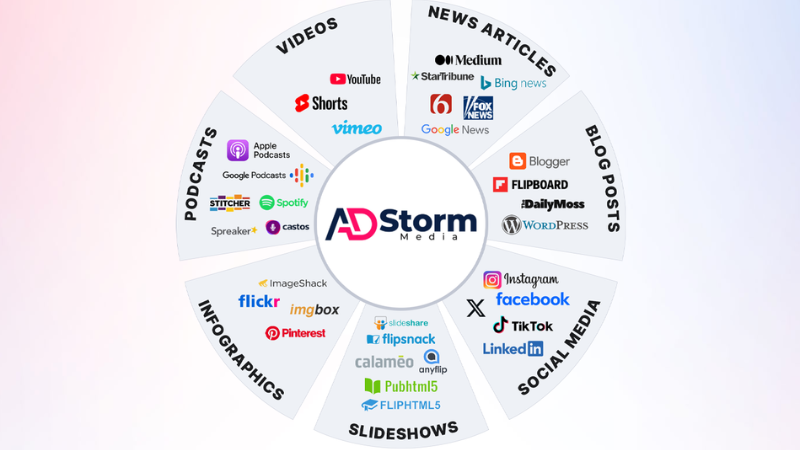
Your original blog post becomes the source asset.
Everything else is built from it.
Asset #1: The Original Blog Post
Your long-form SEO article becomes the hub that everything else points back to.
Asset #2: A YouTube Video
Turn the article into a video walkthrough that captures YouTube search traffic.
Asset #3: A LinkedIn Article
Reframe the content for a professional audience and create a second discovery path.
Asset #4: A Short-Form Video
Extract the strongest insight and turn it into a Reel, Short, or TikTok.
Asset #5: An Infographic
Transform key points into a visual format that is easy to share and reference.
Asset #6: An Email Newsletter
Send the core insight to your subscriber list and drive readers back to the original article.
Asset #7: A Podcast Episode
Use the article as a discussion outline for an audio audience.
Asset #8: Social Media Micro-Posts
Break the article into multiple standalone insights and distribute them over several weeks.
Asset #9: A News-Style Distribution Article
Create an educational article suitable for syndication and authority placements.
Asset #10: A Slide Presentation
Convert the article into a visual presentation for platforms like LinkedIn and SlideShare.
The result?
One piece of content.
Ten distribution touchpoints.
Multiple discovery pathways.

The Content Amplification Framework: Step-by-Step
Step 1: Create a Source Asset Worth Amplifying
Focus on content that:
Answers important customer questions
Has long-term value
Supports your core service
Demonstrates expertise
Not sure what type of content performs best over time?
👉 Related Reading:
How Content Amplification Really Drives Blog Traffic (And Why Most Blogs Never Get Seen)
Step 2: Map Content to Platforms
Adapt the format instead of simply reposting the same thing everywhere.
Step 3: Build a Distribution Calendar
Spread distribution over several weeks instead of releasing everything at once.
Step 4: Cross-Link Assets
Every asset should point back to the source content whenever possible.
Step 5: Measure Results
Track performance and double down on the channels producing the best visibility.
Real-World Example: A Roofing Company’s Content Multiplied

Imagine a roofing company publishes:
“7 Warning Signs Your Roof Needs Replacement Before a Leak Becomes a Disaster.”
Without amplification:
Publish the article
Share it once
Wait for rankings
With amplification:
Blog article
YouTube video
LinkedIn article
Instagram Reel
Infographic
Email newsletter
Syndicated article
Google Business Profile post
Carousel post
Podcast discussion
The article doesn’t need to rely entirely on search rankings because it’s already being discovered through multiple channels.
That’s the power of amplification.
👉 Related Reading:
How Small Businesses Can Increase Website Traffic Without Ads (2026 Guide)
🔥 Most Businesses Don’t Need More Content
They need more visibility.
See how modern content amplification helps businesses get discovered online.
The Measurable Business Benefits of Content Repurposing
Better ROI
One piece of content generates multiple visibility opportunities.
Stronger Brand Recognition
People rarely buy after a single interaction.
Amplification increases the number of times your audience encounters your brand.
Diversified Traffic Sources
Traffic can come from:
Search
Video
Social media
Email
Referral channels
👉 Related Reading:
Why Most Local Businesses Stay Invisible Online (And How To Fix It)
Stronger SEO Signals
Amplification often creates:
Brand mentions
Referral traffic
Backlinks
Authority signals
👉 Related Reading:
AI SEO Tools Vs Content Amplification: What Local Businesses Need In 2026
Faster Audience Growth
Every platform has its own discovery engine.
Amplification allows your business to benefit from all of them.

Why Most Small Businesses Get Stuck — And How to Break Through
Most businesses struggle because of:
Limited time
No documented process
Content-first thinking
Lack of measurement
The solution isn’t more effort.
It’s a repeatable system.
One source asset.
Multiple derivatives.
Consistent distribution.
Measured results.
Repeat.
👉 Related Reading:
Why More Visibility Without a System Is a Waste of Money
The Competitive Visibility Advantage
Publishing consistently is no longer a competitive advantage.
It’s the baseline.
The brands winning online aren’t necessarily producing the most content.
They’re creating the most opportunities for discovery.
They’re building more visibility from every piece they create.
Content amplification is how you build that visibility efficiently.
👉 Related Reading:
The Lead Conversion Gap: Where Most Businesses Lose Revenue
Frequently Asked Questions
What is content amplification, and how is it different from content repurposing?
Content repurposing is the process of reformatting existing content for different platforms — turning a blog post into a video, for example. Content amplification is broader. It encompasses repurposing and strategic distribution to maximize the visibility and reach of your content across multiple channels simultaneously.
How many assets can you realistically create from one blog post?
A well-researched, long-form article of 1,500 or more words can typically be broken into 8–12 distinct assets without the content feeling diluted. The key is genuine adaptation to each platform's format — not copy-pasting the same text everywhere.
Does content amplification actually improve SEO?
Yes, indirectly. The SEO benefit comes from increased brand mentions, referral traffic, backlinks from syndicated content, and the authority signals that come from multi-channel engagement — all factors Google uses to evaluate domain credibility and content relevance.
How long does it take to see results?
Most businesses begin to see measurable cross-channel traffic increases within 60–90 days of consistent execution. SEO improvements typically compound over 6–12 months as backlinks and authority signals accumulate.
Is this strategy realistic for a small business without a marketing team?
Yes, with the right process. The key is batching: create one strong source asset per month, then systematically build derivative assets using templates and a consistent distribution calendar. Many small businesses start with 4–5 assets per piece and scale from there.
Which content amplification asset generates the best ROI?
This varies by industry and audience, but short-form video and email newsletter distribution consistently deliver the highest immediate engagement, while infographics and syndicated articles generate the most durable backlink and SEO value over time.
What types of content work best as source assets?
How-to guides, listicles addressing common customer questions, data-driven industry insights, and case studies are the most amplifiable formats. Evergreen content — topics that remain relevant for 12 months or more — delivers the best long-term ROI from amplification.
Ready to Get More Visibility From the Content You Already Have?
Most businesses don’t need more content.
They need a better distribution strategy.
Content amplification helps turn a single piece of content into multiple visibility opportunities across search engines, social media, authority websites, video platforms, and more.
If you’re already investing time creating content, the next step is making sure more people actually see it.
👉 Learn how AdStorm Media helps businesses amplify content across multiple platforms and authority websites → AdStorm Media & AI
Continue Reading
👉 What Is Content Amplification? (And Why Most Businesses Have Never Heard of It)
👉 How Content Amplification Really Drives Blog Traffic (And Why Most Blogs Never Get Seen)
👉 Why More Visibility Without a System Is a Waste of Money
👉 The Lead Conversion Gap: Where Most Businesses Lose Revenue


